Welcome to your ultimate guide on Intermittent Fasting 101. If the word “fasting” makes you think of starvation, hunger pangs, or deprivation, you are not alone. For decades, we’ve been told that skipping a meal is “bad” for our metabolism. But what if the exact opposite were true?
In a world where food is available 24/7, we have forgotten the ancient biological power of simply taking a break. We are constantly grazing, which keeps our bodies in a permanent state of digestion and storage.
This guide to Intermittent Fasting 101 isn’t about starving yourself; it is about giving your body the time it needs to heal. It is a shift from “constant feeding” to “metabolic rest.”
Below, we will explore the science behind fasting, how to start the popular 16:8 method safely, and how this simple lifestyle shift can lower insulin, boost energy, and help you reverse your biological age.
Watch the visual explanation of the 16:8 Method.
What is Intermittent Fasting 101? (It’s Not a Diet)
Let’s clear up the biggest misconception first: Intermittent Fasting 101 is not a diet plan.
A diet tells you what to eat. Intermittent fasting tells you when to eat. It is an eating pattern that cycles between periods of eating and periods of fasting.
The Biological “Switch”
Think of your body like a hybrid car. It can run on two fuel sources:
- Sugar (Glucose): This comes from the food you just ate.
- Stored Fat: This is energy your body saved for later.
When you eat all day long—snacking from 8 AM to 10 PM—your insulin levels stay high. As we discussed in our guide on balancing glucose, high insulin blocks your body from accessing its fat stores. You are stuck running on “sugar fuel” all day.
Fasting flips the switch. After about 12 hours without food, your insulin levels drop, and your body is finally forced to switch fuel sources. It begins to burn stored fat for energy. This is called Metabolic Switching, and it is the key to flexibility and sustained energy.
We Are Built to Fast
Biologically, humans are not designed to eat every few hours. Our ancestors didn’t have refrigerators or snack bars. They evolved to function at their peak—mentally and physically—during periods without food.
The Science Behind Intermittent Fasting 101
Many people come to Intermittent Fasting 101 for weight loss, but they stay for the incredible health benefits. When you stop digesting food constantly, your body can finally direct its energy toward repair and healing.
Here are the three main ways fasting upgrades your biology:
1. Lowering Insulin (Unlocking Fat Stores)
Insulin is often called the “Fat Storage Hormone.” Every time you eat, insulin spikes to store that energy. If you eat frequently, insulin stays high, and your fat cells remain “locked.”
Fasting allows insulin levels to drop significantly. According to the Mayo Clinic, this drop in insulin is crucial for reversing insulin resistance and reducing the risk of type 2 diabetes.
2. Autophagy (Cellular “House Cleaning”)
This is the most exciting benefit of fasting. The word Autophagy literally means “self-eating.” It sounds scary, but it is actually a survival mechanism that won the Nobel Prize in Medicine in 2016.
Think of it like cleaning your house. When you are busy cooking (eating/digesting), you don’t have time to deep clean the kitchen. But when the cooking stops (fasting), the cleanup crew comes out. During a fast, your body identifies old, damaged, or dysfunctional cells and recycles them to create new, healthy ones.
3. Mental Clarity and Focus
Ever feel the “post-lunch slump”? That brain fog is often caused by blood sugar fluctuations. When you fast, your body runs on ketones (from fat) rather than glucose. Ketones are like “super-fuel” for the brain, providing steady, laser-sharp focus without the crash.
Popular Methods: Finding Your Rhythm
There is no “one size fits all” approach. The best schedule is the one that fits your life and feels sustainable.
The 12:12 Method (The Beginner’s Choice)
If you are new to fasting, start here. This method mimics the natural circadian rhythm.
- How it works: You fast for 12 hours and eat within a 12-hour window.
- Example: Stop eating dinner by 8:00 PM, and eat breakfast at 8:00 AM the next day.
- Why it works: It is gentle, inclusive, and easy to stick to. Most of the fasting happens while you sleep!
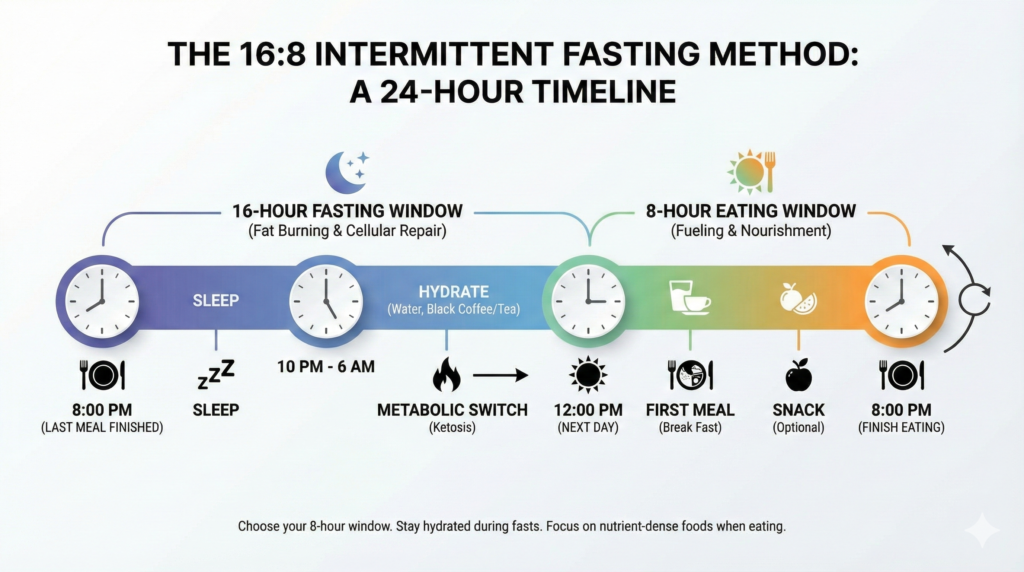
Intermittent Fasting 101: The 16:8 Method
This is the “Gold Standard” because it hits the “sweet spot” for results without feeling too restrictive.
- How it works: You fast for 16 hours and eat all your meals within an 8-hour window.
- Example: Skip breakfast, start eating at 12:00 PM (Lunch), and finish your last meal by 8:00 PM.
- The Benefit: 16 hours is usually enough time to fully lower insulin and trigger the early stages of autophagy.
The 5:2 Method (For Flexibility)
Instead of a daily schedule, this method focuses on the week.
- How it works: You eat normally for 5 days of the week. On the other 2 days, you limit calories significantly (usually around 500-600 calories).
- Note: This can be harder for beginners to manage. We recommend mastering the daily 12:12 or 16:8 rhythm first before trying this.
How to Start Intermittent Fasting Safely
The biggest mistake beginners make is jumping straight into a strict schedule. If you go from eating all day to a 20-hour fast, you will likely feel miserable and quit. Instead, treat this as a gentle lifestyle shift.
Step 1: Hydrate, Hydrate, Hydrate
When insulin drops, your body flushes out water and electrolytes. This is often why people get headaches, not because of hunger. Drink plenty of water and consider adding a pinch of sea salt to your first glass of the day.
Step 2: The “Push Breakfast” Technique
Don’t skip breakfast cold turkey. Instead, push it back gradually.
- Week 1: Move breakfast from 8:00 AM to 9:00 AM.
- Week 2: Move it to 10:00 AM.
- Week 3: Move it to 11:00 AM or 12:00 PM.Eventually, your “breakfast” naturally becomes lunch.
Step 3: Break Your Fast Gently
How you break your fast is just as important as the fast itself. Do not open your eating window with a sugary donut or soda. This will cause a massive glucose spike.
Tip: Use the “Fiber First” rule we discussed in our article on 5 Hacks to Stop Counting Calories. Start with veggies, healthy fats, or protein (like eggs or nuts) to keep your energy stable.
What Can You Drink While Fasting?
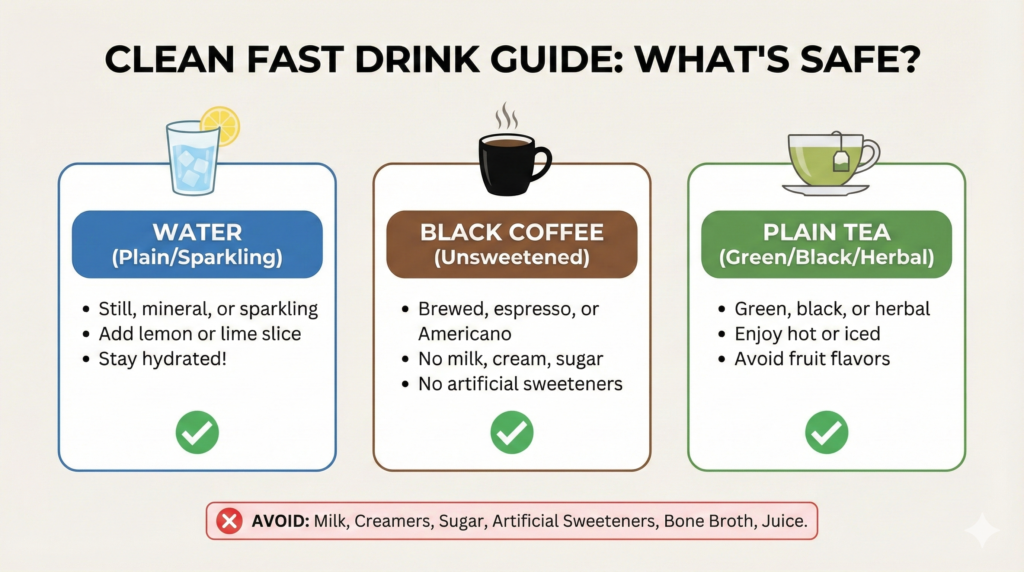
To get the full metabolic benefits, you need to keep insulin low during your fasting hours. This is often called a “Clean Fast.”
Here is your safe list:
- Water: Still, sparkling, or mineral water (add a slice of lemon if you like).
- Black Coffee: No sugar, no milk, no creamers. Harvard Health confirms that coffee can support metabolic health, provided it is unsweetened.
- Tea: Green tea, black tea, or herbal tea (unsweetened). Green tea is excellent as it boosts metabolism.
⚠️ What Breaks a Fast?
Even a splash of milk, almond milk, or “zero-calorie” artificial sweeteners can trigger an insulin response in many people. If your goal is gut rest and autophagy, stick to the clean list above.
Who Should Avoid Intermittent Fasting?
Fasting is a powerful tool, but it is not suitable for everyone. Inclusivity in health means recognizing that our bodies have different needs at different stages of life.
You should skip fasting or consult a doctor first if you:
- Are Pregnant or Breastfeeding: Your body needs constant nutrients for growth.
- Have a History of Eating Disorders: Fasting can be triggering for those recovering from anorexia or bulimia. Please prioritize your relationship with food above all else.
- Have Type 1 Diabetes: Fasting effects blood sugar and medication needs significantly.
- Are Under Chronic Stress: If you are burnt out or not sleeping, fasting might add too much stress to your body. Focus on our Sleep Hygiene Science guide first to restore your energy foundation.
Golden Rule: Listen to your body. If you feel dizzy, weak, or unwell, eat. Fasting should feel like a relief, not a punishment.
Freedom, Not Restriction
Intermittent fasting is often misunderstood as just another diet trend. But at its core, it is a return to simplicity. It frees you from the constant pressure to snack, prep food, and count calories all day long.
By giving your body a daily break, you aren’t starving it—you are giving it the space it needs to repair, heal, and function as it was designed to.
Ready to try it? Start with a simple 12-hour fast tonight (just stop eating after dinner!). Listen to your body’s cues, stay hydrated, and watch how your Intermittent Fasting 101 journey transforms your energy.
For more tips on what to eat during your window, check out our full guide on Metabolic Health at SaziBox Health.