If you want to unlock peak performance in your daily life, the answer lies in applying Sleep Hygiene Science. In our busy world, many of us treat sleep as a luxury—something to be squeezed into the margins of a busy schedule. Yet, decades of neurological and physiological research confirm that restorative sleep is not downtime; it is a vital, non-negotiable component of peak mental and physical performance.
The concept of “sleep hygiene” goes beyond simply wanting more rest. It involves deliberately adjusting behaviors and environment. This practice consistently promotes healthy, uninterrupted rest. By applying this knowledge to our nightly cycles, we unlock a new level of focus, memory, and energy. This boost to overall cognitive function is impossible to achieve while running on a sleep deficit.
🎥 Want the 3-Minute Visual Guide?
Decoding the Cycles: The Science of Sleep Stages and Deep Rest
To truly optimize your rest, you must first understand what the brain is actively doing when you are asleep. A full night’s sleep involves cycling repeatedly through two main phases. These are Non-Rapid Eye Movement (NREM) sleep and Rapid Eye Movement (REM) sleep. Let’s look at the distinct role each phase plays as it prepares your mind and body for the next day.
NREM Sleep: The Foundation of Restorative Sleep
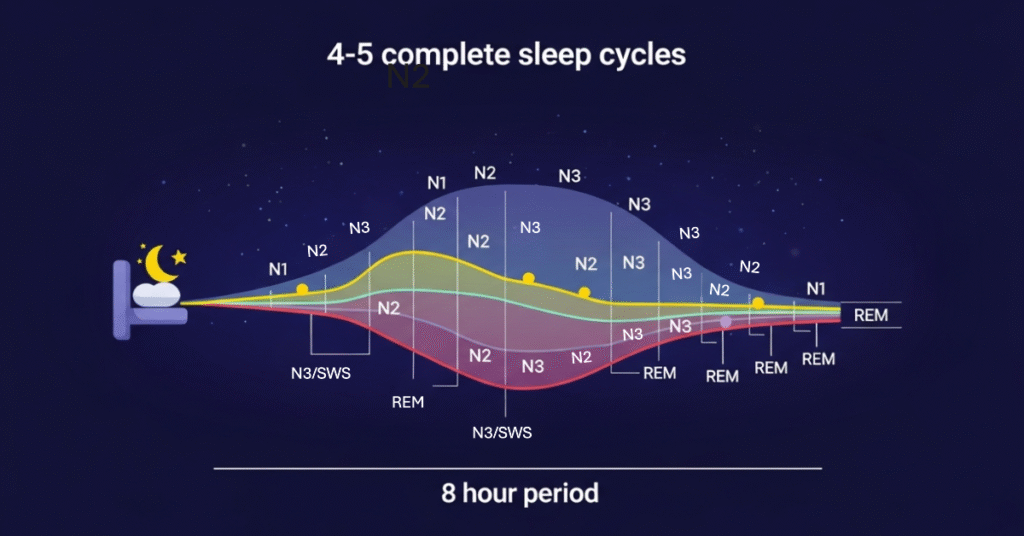
NREM sleep comprises about 75% of your total sleep time and is divided into three stages (N1, N2, and N3, also known as Slow-Wave Sleep or SWS):
- N1 (Light Sleep): This is the transition phase. Your breathing and heart rate begin to slow, and you wake up very easily here.
- N2 (Deeper Sleep): Your heart rate and body temperature drop further. This stage is critical for memory consolidation, specifically for learning new skills and tasks (procedural memories). Specialized brain activity called sleep spindles occurs here, helping protect your sleep stability.
- N3 (Slow-Wave Sleep / SWS): This is the deepest, most restorative stage. Characterized by slow delta waves, SWS is the body’s primary repair station. During this time, your body repairs tissues, releases growth hormone, strengthens the immune system, and moves factual memories (declarative memories) into long-term storage. Waking up during SWS often results in a period of mental fogginess.
REM Sleep: Cognitive Processing and Emotional Regulation
NREM handles the foundational restoration. However, REM is crucial for integrating complex information, emotional processing, problem-solving, and creativity. REM sleep features rapid eye movements, brain waves similar to those when you are awake, and temporary muscle paralysis. This is the stage where vivid dreaming most often occurs.
As the night progresses, your sleep cycles include longer periods of REM. This finalizes the high-level mental housekeeping needed for peak cognitive function.
The take-away? Skimping on sleep shortens these cycles, sacrificing both physical repair (SWS) and high-level cognitive integration (REM). Getting a minimum of seven hours is essential to cycle through all four to five full periods. To learn more about how Sleep Solutions for Women, see our guide on Sleep Solutions for Women.
The Optimal Blueprint: Key Pillars of Sleep Hygiene
Effective sleep hygiene is less about what you do in bed. It is more about what you do in the hours leading up to it. It’s about leveraging your internal clock—the circadian rhythm. Light exposure, temperature, and consistency primarily govern this rhythm. For a detailed overview of the circadian rhythm, refer to this reputable health source like the Sleep Foundation.
Here are the four essential pillars for mastering your daily sleep habits:
Pillar 1: Consistent Timing and Light Exposure for Circadian Rhythm
The single most powerful habit for better sleep is maintaining a consistent schedule.
- Fixed Wake-Up Time: This is the anchor of your circadian rhythm. Waking up at the same time every single day (yes, even weekends!) sets your internal clock. This routine, in turn, dictates when you feel sleepy later that night.
- Optimal Timing of Light: Exposure to bright, natural light immediately upon waking helps suppress the sleep hormone melatonin, telling your brain it’s time to be alert. Conversely, dimming lights and using warm-spectrum bulbs in the evening signals to your brain that melatonin production should ramp up.
Pillar 2: Curating Your Sleep Sanctuary: A Core Tenet of Sleep Hygiene Science
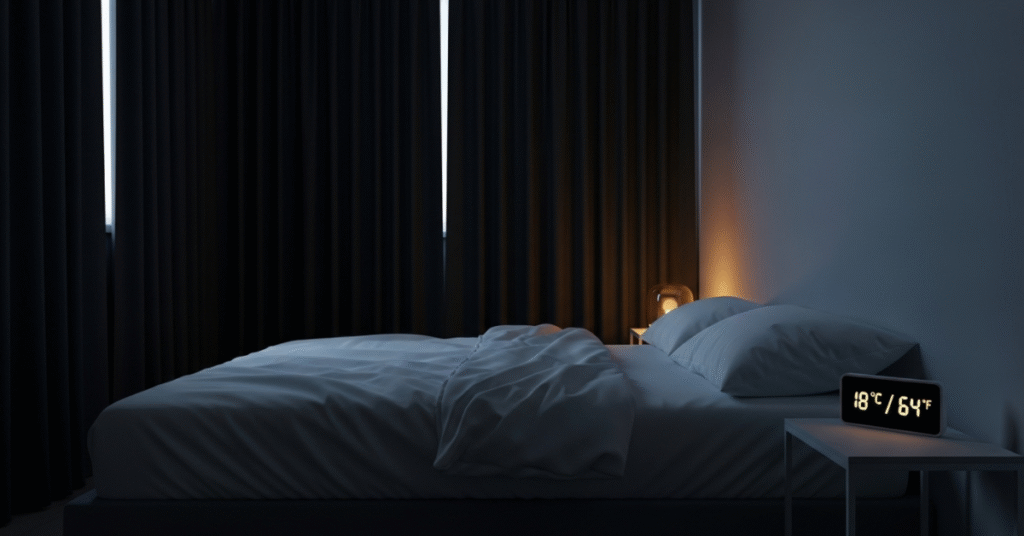
Your bedroom should be optimized to facilitate the rapid onset and maintenance of sleep. Think of it as a “sleep cave” designed for total rest. Following the principles of Sleep Hygiene Science requires commitment to this routine.
- Temperature: Experts often cite the ideal temperature range for sleep as cool—between 60 and 67°F (15.6 and 19.4°C). This slight drop in ambient temperature facilitates the necessary drop in your core body temperature. This process initiates sleep.
- Darkness and Quiet: Use blackout curtains or an eye mask to eliminate light, as even small amounts of light can suppress melatonin. Utilize earplugs or a white-noise machine if you live in a noisy environment.
- The Bed is for Two Things Only: To reinforce the mental association, your bed should only be used for sleeping and intimacy. Avoid working, eating, or watching TV in bed. If you cannot fall asleep after about 20 minutes, get up and move to another room. Do a relaxing activity until you feel sleepy, then return to bed.
Pillar 3: Managing Neurochemical Intake for Quality Rest
What you consume throughout the day and evening directly affects your neurochemistry and ability to achieve deep sleep.
- Caffeine and Nicotine: These are powerful central nervous system stimulants that can take hours to clear the system. Avoid all forms of caffeine and nicotine at least six to eight hours before bedtime.
- Alcohol: Alcohol may initially feel like a sedative. However, it dramatically disrupts the structure of your sleep cycles. This typically suppresses REM sleep and causes wakefulness later in the night. Avoid it in the four hours leading up to bedtime.
- Timing of Meals: Avoid heavy, large meals in the two to three hours before bed. Active digestion can interfere with sleep onset. A light snack is fine if you are truly hungry.
Pillar 4: Implementing a Digital Sunset and Wind-Down Routine
The hour before bed should be dedicated to a transition ritual that signals safety and calm to your body.
- The Blue Light Problem: Electronic screens (phones, tablets, laptops) emit blue light, which is highly effective at inhibiting melatonin release. The most critical rule is to enforce a “digital sunset.” This means turning off all light-emitting screens at least 60 minutes before you plan to sleep.
- The Wind-Down: Engage in relaxing, non-stimulating activities: reading a physical book, gentle stretching, meditation, or taking a warm bath. This ritual lowers your heart rate and allows your mind to transition smoothly from the day’s stress to rest. For more science-backed relaxation methods.
The Performance Advantage: How Sleep Mastery Transforms Your Life
The reward for adopting meticulous sleep hygiene isn’t just less yawning; it’s a dramatic boost to your functional performance. Sleep deprivation, defined as getting less than seven hours, has measurable negative consequences:
- Cognitive Decline: Poor sleep impairs attention, slows reaction time, degrades complex decision-making, and reduces creativity. One night of severe sleep loss can lead to cognitive deficits similar to being legally impaired.
- Physical Function: It impacts coordination, decreases accuracy, and reduces endurance. Studies show that purposeful sleep extension improves sprint speeds and specific skill accuracy for athletes.
- Metabolic and Emotional Health: Sleep loss disrupts the balance of hunger hormones, leading to increased cravings and higher risk for metabolic issues. It also impairs the brain’s ability to regulate the amygdala, resulting in increased emotional reactivity and irritability.
Treat your sleep routine as seriously as you treat your workout or your workday. The results—in energy, mood, and cognitive power—will be transformative. By making the commitment to excellent sleep hygiene and optimizing your sleep habits, you are making a fundamental commitment to your long-term success. Mastering Sleep Hygiene Science is the ultimate tool for achieving your peak potential. We recommend consulting with your primary care provider if sleep issues persist, or visiting the Mayo Clinic Sleep Tips for more immediate steps.